For Becky Aldred, football has always been more than just a game. Born and raised in Burnley, the sport has shaped her life from a young age, starting with playing for Burnley Girls from the age of seven through to the age of twenty-one with the Burnley Football Club women’s first team. She now works as Female Football Development Manager.
Football looked very different when Becky was growing up, as opportunities for girls were limited and at school, she often found herself playing in boys’ teams because there were fewer pathways available for young female players. “I was always into sport,” Becky says. “I loved football and I wanted to be involved.”
Her passion for football started with her family. Her dad took her to Turf Moor, where she fell in love with the atmosphere and excitement of match days. “I loved the crowd, the experience and everything about going to football,” she explains. “A friend of my dad had a daughter who loved football and suggested we go and play, even if it was on a boys’ team. From there, I put all my energy into it.”
That passion for the game soon became something Becky wanted to build a future around. While football started as a love for playing, it developed into a desire to understand the wider side of the sport and create opportunities for others. Her journey was not without challenges. Becky excelled in PE and sport throughout school but struggled with the written side of education due to undiagnosed dyslexia, which was only identified towards the end of high school.
Once Becky received the right support, she found confidence both academically and through football. She went on to study Football Studies at Burnley College, where she was the only girl in her class, before completing a degree and a master’s in Sport Coaching at Leeds Beckett University.
Although Becky knew a career as a top-level player might not be her path, she wanted to remain close to the game. She completed her coaching badges alongside her studies, worked at Leeds United and eventually returned home to Burnley, bringing her experience back to the community that helped shape her.
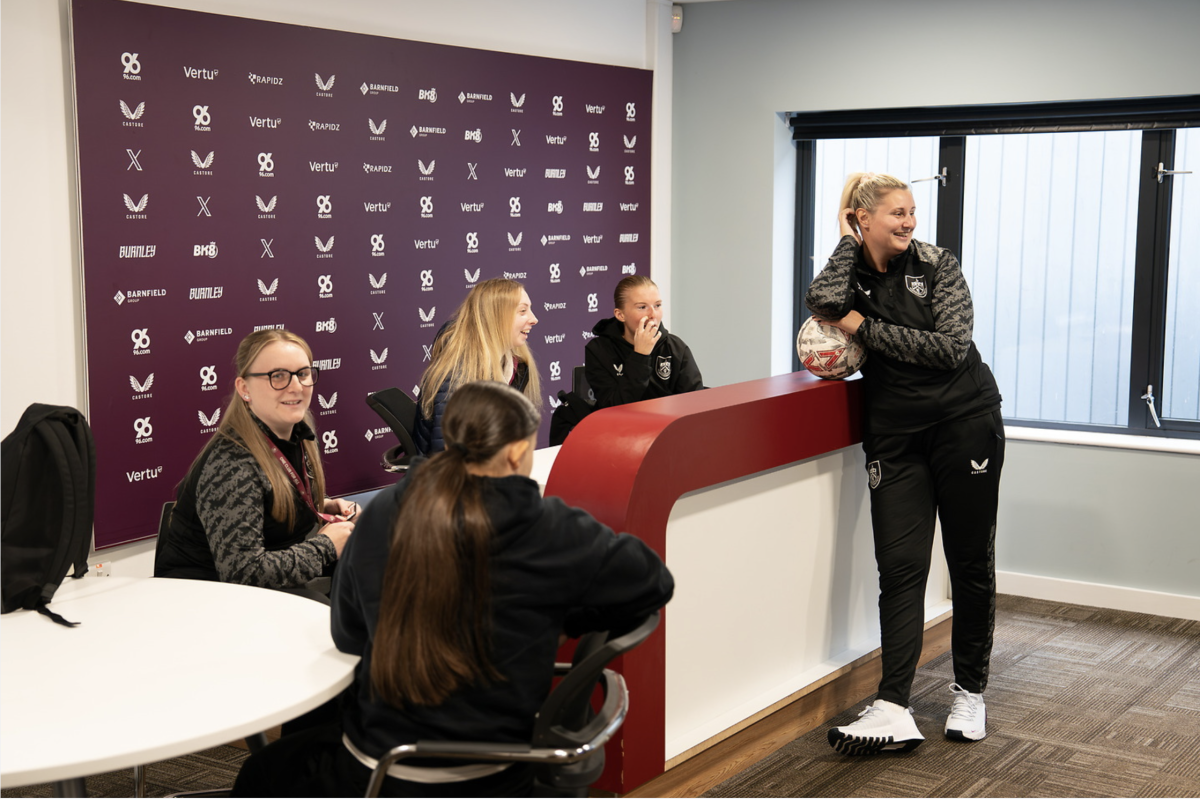
Over the years, Becky has seen women’s football transform. The rise of the Lionesses, the increased visibility of the women’s game and the growth of professional opportunities have all changed what is possible for young girls. “It has definitely evolved,” Becky says. “We saw it with the Lionesses at the Euros. Women were being given a platform and an opportunity, and they had a good environment to thrive in.”
When Becky was younger, those opportunities were not always there. “We didn’t always have that environment to thrive, or female role models.”
Growing up, Becky looked up to male players because women’s football had far less exposure. Today, she sees women such as Emma Hayes as role models because of the impact they are having on the sport.
For Becky, one phrase captures the biggest change she has seen in the women’s game. “It’s about seeing it to believe it,” she says. “Before, it had to come from within because you didn’t always see those opportunities. Now girls can see women doing it and know that they can too.”
That belief is at the heart of Becky’s work in Burnley. Now working as a Manager, Becky focuses on the operational side of the players’ pathway, creating and developing opportunities for girls to enjoy football, progress their skills and potentially build a career within the sport.
Programmes such as Bella Bees provide girls with an introduction to football in a fun and welcoming environment, helping them fall in love with the game. There are also development pathways, skills centres and national programmes designed to support young players with potential.
But Becky is clear that football is not only about becoming a player. “It’s about creating opportunities in every part of the game,” she says. “Whether that’s coaching, physio, sports science, business or any role around football. It’s about keeping women within football and showing them there is a place for them.”
Returning to Burnley has been especially important for Becky because she understands the experiences of the girls she now supports. “I’ve been in those boots of that young girl,” she says. “I know what it feels like to be the only girl in the room.”
From playing in boys’ teams growing up to completing coaching qualifications and working in a traditionally male dominated industry, Becky has had to challenge expectations and prove herself. Now, she wants to make sure young girls do not feel the same barriers. “I want them to feel like they belong” she says.
The continued growth of Burnley’s women’s teams is helping create that sense of belonging. Greater visibility and stronger pathways mean young girls can now see themselves representing the club, whether that is on the pitch or in another role within football.
Becky’s ambition is to continue strengthening women’s football in Burnley from the grassroots level upwards, ensuring the game is accessible to as many girls as possible while providing the right support for those looking to progress. Success is not just about finding the next player. It is about building an environment where girls feel supported, valued and confident that football has a place for them.
Her message to any young girl thinking about getting involved is simple. “Follow what you’re good at and don’t let barriers stop you,” she says. “If there is a barrier, smash it down or find another route that will get you where you want to be.”
Find out more about Burnley FC In The Community