It never amazes us just how many incredible businesses are in Burnley. Despite us thinking we’re pretty clued up on the firms here, there are literally hundreds if not thousands of hidden gems (especially on our business parks and industrial estates) that we haven’t even got round to visiting yet.
One such business is Proctor Process Plant, a niche engineering firm that has its base in an unassuming unit at Billington Road. But behind the doors lies a business that has been going since the 1980s – and it’s something of a family affair.
Nathan Proctor is the MD, but it was his father Chris who started the business, which is focused on process heating (stay with us!). Process heating refers to the application of heat during industrial processes and involves raising the temperature of materials to create or modify products. It uses energy sources such as gas or electricity to heat, dry, melt, or treat materials during manufacturing.
And in the case of Proctors, they have some interesting partnerships with well-known brands. Burnley.co.uk was amazed to hear they create some of the machinery that makes Warburton’s crumpets!
We met Nathan along with his eldest daughter Emmie, who works in the spares department but is currently studying for a digital marketing qualification and hopes to create a marketing function upon graduation. Other daughter Mollie works in the office and in the service department. Meanwhile, eldest son Josh is a qualified gas engineer and is part of the on-site team. Youngest son George is still in school, but it could perhaps be assumed that he may also follow in the footsteps of his siblings.
“It’s how I got into the business,” Nathan explained. “I used to work with my dad in the school holidays and on weekends when you were allowed to do things like that! This was when Proctors mainly did the heat process for textiles and carpet backing and my mother ran the office, which at the time was in Bury where a family friend had a small unit to rent. This progressed to other industries through word of mouth and before long we moved to Clough Fold in Rawtenstall to a larger space.”
Process Proctor Plant spent seven years at that location before outgrowing it once more and relocating to a purpose-built facility in Stacksteads. It was during this time that much of their focus shifted to aluminium, especially for the canning industry. But as this Lancashire-based family business grew, it soon found itself competing with a major U.S. corporation – and that’s where the journey to Burnley began.
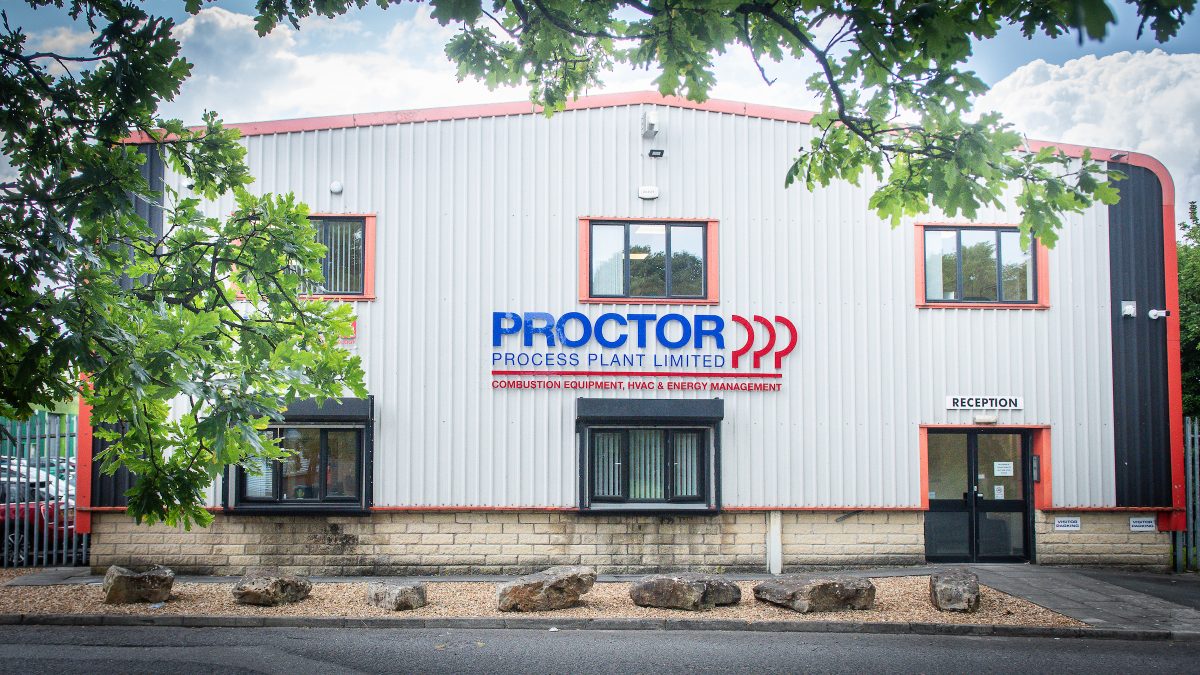
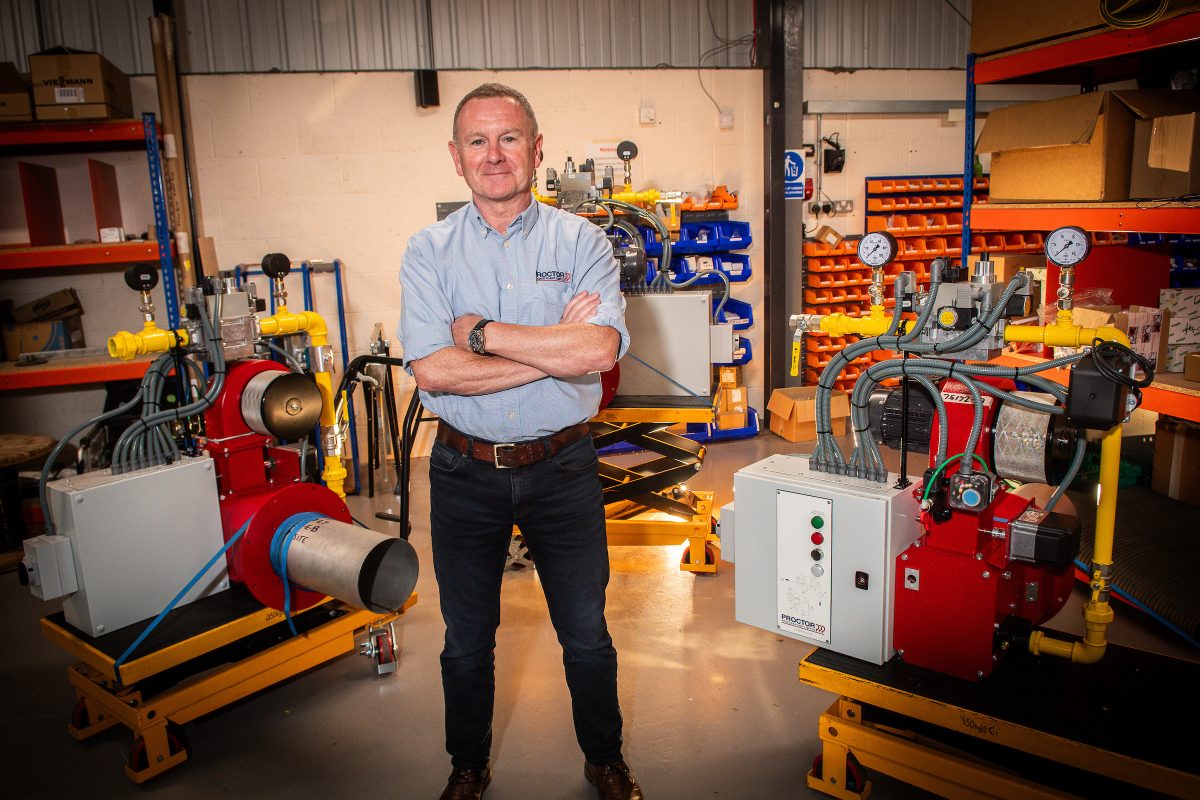
Proctor Process Plant in Burnley and MD Nathan Proctor
David and Goliath (Burnley’s version)
Despite catering to the thriving canning market and having to go head-to-head with an established US giant who had a large section of the customer base, Proctors actually secured a huge volume of work. And Nathan is confident why:
“As a smaller company, we were able to move faster and offer a more tailored service, which really appealed to customers. We’re available around the clock to support any machinery issues, and if needed, we can be anywhere in the world within 48 hours to assess our equipment in person.”
Emmie recalled one time when the family was about to head into a theatre to watch The Lion King, but her dad received a call from overseas! The company on the other end was so impressed by Nathan’s quick response and hands-on support that they went on to become one of Proctor’s biggest clients. Another major customer is canning manufacturer Stolle, who recently relocated to Frontier Park in Burnley.
As word of mouth continued to grow, Nathan and the team at Proctors identified a gap in the market. In a typical canning line, the manufacturing process releases fumes that must be safely oxidised before being released into the atmosphere. They realised that the residual heat from this process could be redirected back into the main system, making some operations significantly more energy-efficient, and in certain cases, even carbon free.
Many clients adopted this new way of working, saving hundreds of KW an hour. Proctors was in demand to build these bespoke systems and once again they’d outgrown their space.
“We’re now in 2016. I looked round lots of different places, but I was really keen to buy not rent. I rang up Burnley Council and spoke to principal economic development officer Martyn Hardacre. Within 24 hours, him and a colleague came to see me and suggested the current unit. They even managed to secure us some funding; we’re a real advocate for the council and after seeing how they supported us, we knew Burnley was the right place for us,” Nathan explained.
The additional space and demand for their services and new innovative processes means the team now sits at over 40, and they’ve already had to restructure the factory floor to ensure the unit works for their needs.
This green innovation caught the attention of Tesla in Germany, who have since visited the Burnley site three times. After Proctors developed a heat recovery system for their paint lines, the company is now projected to save multiple MW every hour.
So, what next?
It’s been an incredible success story of a company that has grown organically and sustainably over the years, but what next for Proctor Process Plant?
Nathan concluded: “We have a comprehensive 3D design suite and a talented team capable of researching and manufacturing bespoke products for a large range of industries. We’ve also welcomed several apprentices and degree apprentices from Burnley College, specialising in product design, mechanical, and electrical engineering, and we actively support T-Level students with valuable placement opportunities.
“We’ve also joined the Burnley Bondholders. Like the fact we never did marketing, we also never networked, and everyone I spoke to recommended the bondholders. We are looking forward to see where the journey takes us!”