Written by Leane Kelly
I have always been aware of the way that music can enrich our lives, bringing joy and creativity even in the darkest of times. As a young musician I spent many an hour practicing at my piano, escaping from the pressures of college exams or simply finding joy in a world that was uniquely mine. Sadly, the busyness of life and having a young family has somehow meant that tinkling the ivories isn’t something I get much time for these days.
So, when our editor asked me to write about the power of song, I was delighted. My interviews with two inspiring Burnley choirs became more than just a reminder of the importance of music. They offered a fascinating insight into the way singing can bring people together and build confidence whilst supporting community, connection and inclusion.
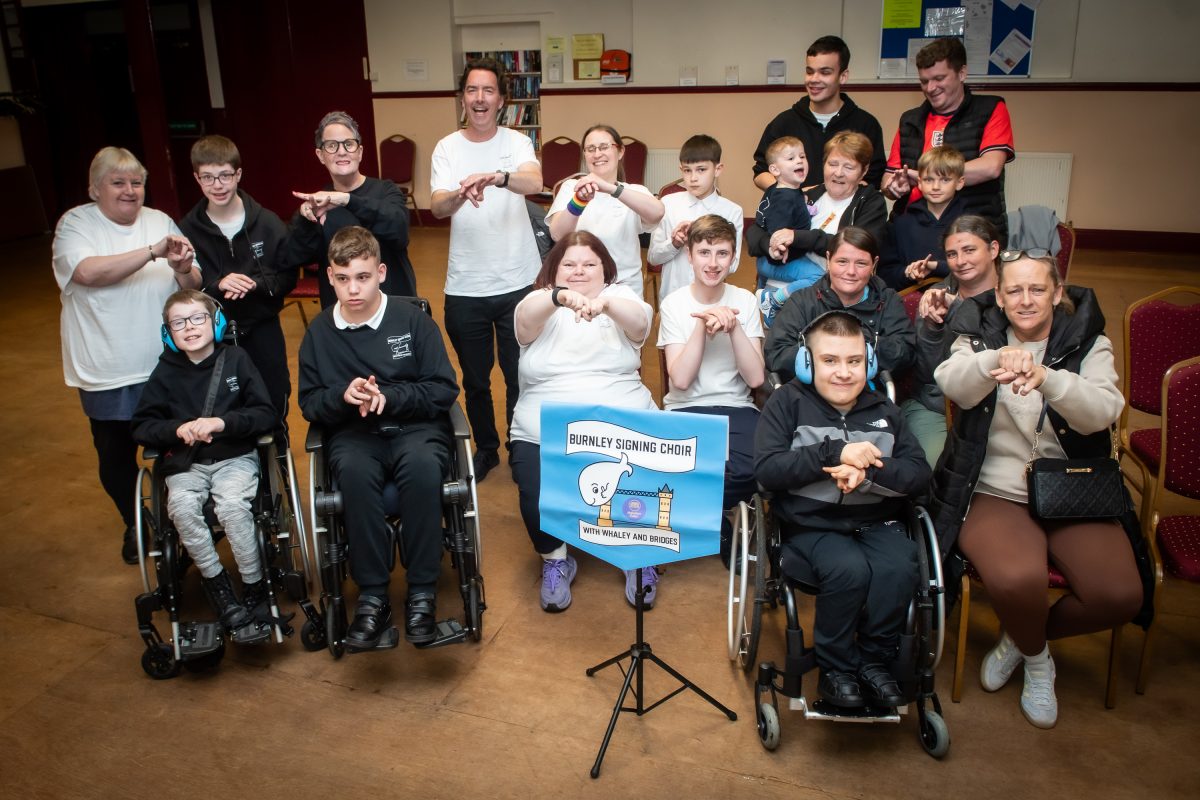
The Signing Choir
One of the most wonderful things about music is that it has its own language. Learning an instrument can be challenging, but music has a remarkable ability to communicate emotions without saying a word. When I met the organisers of Burnley Signing Choir, I discovered Makaton, a communication programme that uses signs, symbols and speech together to help people communicate and works beautifully alongside music.
Founded by Ridgewood Community High School colleagues Chris Bridges and Helen Whaley, the choir welcomes children, young people and their families, although anyone is welcome to join. I met Chris and Helen at one of their monthly choir rehearsals in a local church building. From the moment I arrived I could feel the welcoming and relaxed atmosphere, and as members started to arrive it was obvious they felt completely at home, choosing their favourite places to sit or stand, however they felt most comfortable.
Chris, an accomplished musician and music teacher, and Helen, a teaching assistant and qualified Makaton tutor, wanted to create a fun, safe space for where families could enjoy music together. Judging by the smiles and laughter around the room, they have certainly achieved that.
As rehearsals began, I realised that this wasn’t just a choir performing songs. The members had chosen much of the repertoire themselves, with a clear favourite being “Mash-Allah”, which had everyone smiling from the very first notes. Watching the group sing and sign together it was obvious that this was their choir, they owned it.
Chris explains that singing does far more than entertain. It releases endorphins, improves learning and, when people sing together, it can even change the way our brains work by strengthening connection and wellbeing. Helen has seen equally powerful changes. The biggest transformation, she says, has been confidence – not just for the children, but for parents too, who have built friendships and support networks through the choir.
“It was slow to start,” Helen tells me, “but singing and signing together created common ground.” As the community grew, barriers began to disappear. Music and Makaton provided a way for families to communicate more easily, creating opportunities for connection that simply hadn’t existed before.
As I watched, it was impossible not to get caught up in the joy of it all. Music means something different to each of us, but there was an unmistakable sense of belonging in that room. Whatever challenges people were facing seemed, for a while at least, to be forgotten as they sang and signed together.
Both Chris and Helen point to Burnley’s Diversity Festival last year as the moment they realised the choir had become something special. Helen describes it simply: “My heart was full when I saw the children signing to the music.”
Another unforgettable moment came when the choir received the Culture For All Award at the Culture Burnley Awards in recognition for their work helping Burnley a more Makaton friendly town.
“It meant so much to everyone,” says Chris. “It was a really proud and emotional moment”.
Helen’s ambition now stretches far beyond the choir itself. She would love to see Burnley recognised as a Makaton town, where more families, businesses and organisations embrace signing as part of everyday communication. Her dream is even to see the choir perform on television, helping to raise awareness and funding for more communication boards across the town.
As I left, I couldn’t help reflecting that what I had witnessed wasn’t simply music. It was inclusion in action – proof that sometimes the most powerful messages are those without any words at all.
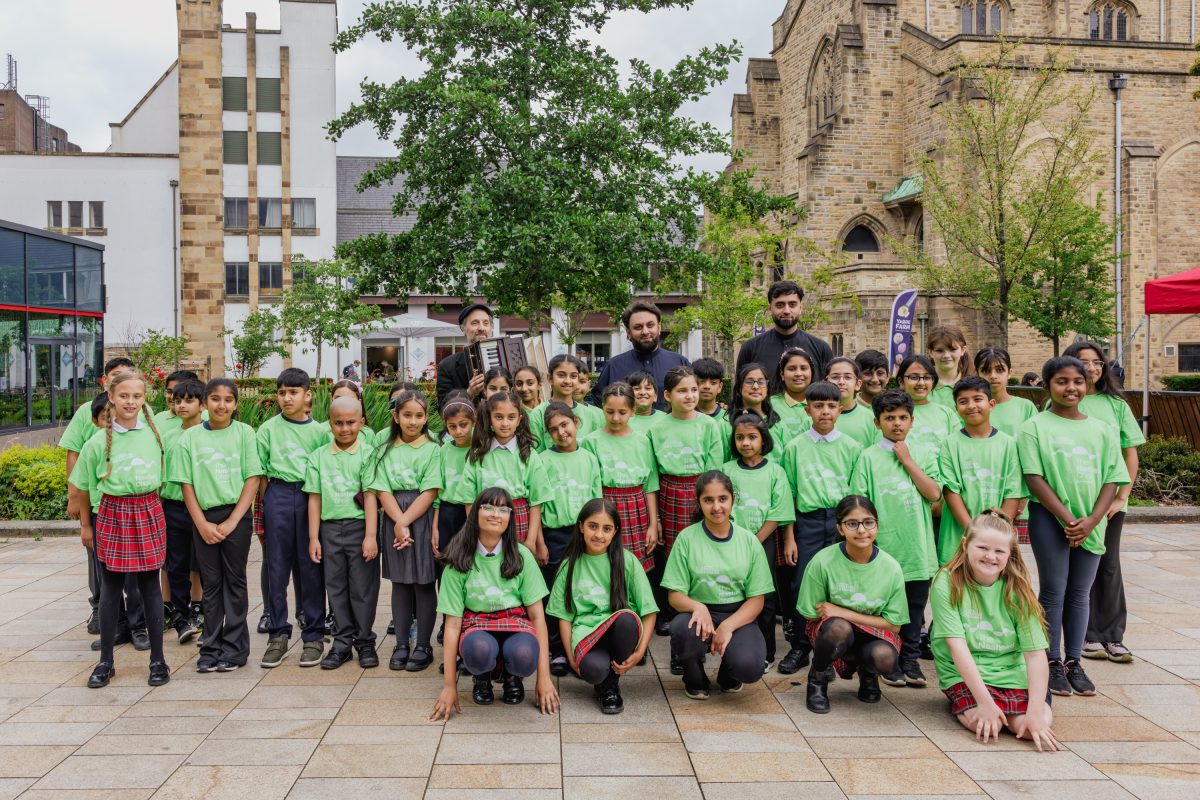
The Nasheed Choir
The second choir in this feature approached music from a very different tradition, yet l soon discovered the same strong sense of belonging, welcome and shared purpose. The Nasheed Project was a collaboration between Building Bridges in Burnley and Hussnain Hanif, founder of the world’s first polyphonic nasheed choir. Together they created a project that used music to connect people from different faiths, cultures and communities.
The choir performs polyphonic (four-part harmony) arrangements of nasheeds – Islamic devotional songs of faith, praise and reflection. Hussnain, an acclaimed nasheed artist, was introduced to music by his father, who encouraged his talent from an early age and supported him to sing in local mosques from the age of four.
Building Bridges in Burnley is a charity that promotes understanding and community cohesion by bringing together people from different faiths, cultures and backgrounds through shared activities and education. Sajda Majeed MBE, social impact consultant and trustee at Building Bridges, explained that funding from the UK Shared Prosperity Fund made the project possible.
Working alongside Hussnain, and with enthusiastic support from Heasandford and Barden Primary schools, they set out to engage local children and their families. They explained that music and singing are not traditionally encouraged in some Asian and Muslim homes, so this project created an opportunity to connect faith and music in a way that welcomed families into the experience.
Hussnain believes that nasheeds are not just for Muslims; they are for everyone, and he is passionate about helping more people understand their meaning.
“Music is the language of love,” he tells me. “People may not understand the language, but they still understand because the emotion is there, and they are moved by it”.
His personal mission is to bring people of every race and background together through nasheed singing.
“There are really very few things within community that divide us,” he says. “People focus on those few things, but we need to focus on the many things we have in common. Nasheed is one of those things.”
Sajda is equally passionate, and I can almost see her reliving the moment as she describes the choir performing at the Community Iftah held at Burnley Football Club as part of the Lancashire Sings project. The event brought together choirs, schools, churches, mosques, the university and Burnley College for memorable evening of music and community. Hundreds of children, parents and local residents attended, many visiting the venue for the first time.
“Music always has a way of drawing people together,” Sajda says. “This was an absolutely magical event. Children, teachers and parents of all colours and creeds came together under one roof to sing music from around the world, completely united by the sound”.
Listening to both Sajda and Hussnain, I found myself wondering why singing has such a powerful effect on people. Sajda smiles as she explains: “When people sing together, their guard comes down. Differences are left at the door, stereotypes are broken and worries are left behind.”
Looking at the photographs and videos from rehearsals and performances, it is easy to believe her. The children’s excitement, their nervous anticipation before performances and their obvious pride afterwards tell me this is an experience that will stay with them for years.
Their commitment, supported by dedicated teachers, Hussnain’s passion and enthusiasm, and Sajda’s vision for community cohesion, was recognised at the Culture Burnley Awards where the Nasheed Project won the Cultural Partnership Award.
For both Hussnain and Sajda, the lasting impact of the project matters far more than any single performance. For Hussnain, Nasheeds are a deeply personal expression of faith, and sharing them has become his life’s mission. The moments he treasures most are those that continue to influence young people with a lasting impact.
“When you have 500 young people singing together in one space, it’s incredibly powerful,” he says. “It moves people to tears. Years later I still meet young people who tell me they were inspired by their experience of Nasheed.”
He also finds great joy in working with young people with additional needs such as those who are neurodivergent, helping them to express themselves through music in a safe and supportive environment. He also points out that for families who may never be able to afford private music lessons, projects like this provide opportunities that might otherwise be out of reach.
On the surface, these two choirs could hardly be more different. One combines music with Makaton to break down barriers to communication, while the other celebrates faith and culture through traditional nasheeds. Yet both place inclusion, community and belonging at the heart of everything they do.
They remind us that music is a language understood by everyone, capable of building confidence, creating friendships and bringing people together in ways that words alone cannot.
As I reflected on my time with both choirs, it wasn’t their differences that stayed with me, but the remarkable similarities in their warmth, passion and generosity. I am sure that the power of music and the passion of those behind these two amazing choirs will impact the young people and their families long into the future.
And I couldn’t help smiling at one final thought: what an extraordinary collaboration it would be if these two choirs ever performed together.